Life Cycle Assessment

At ALBITEC, we evaluate the environmental impact of our products across every stage of their life cycle to support transparent and sustainable decision-making.

Life Cycle Assessment of ALBITEC Spirulina

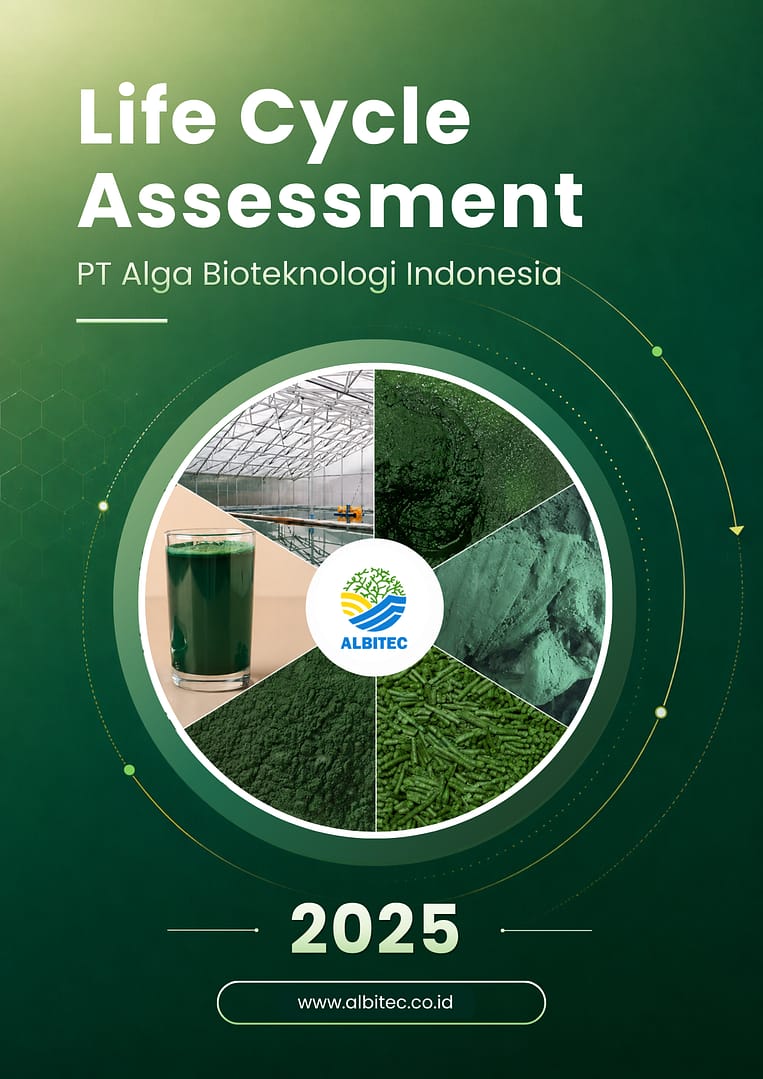
This Life Cycle Assessment (LCA) report presents a comprehensive evaluation of the environmental impact profile of the Spirulina production system at PT Alga Bioteknologi Indonesia (ALBITEC), utilizing a cradle-to-gate approach that encompasses the product’s entire life cycle from infrastructure procurement, cultivation, and harvesting, through to the final processing stage. This scientific analysis specifically identifies that the primary contributors to key environmental impact categories such as Global Warming Potential (GWP), Acidification, and Freshwater Aquatic Ecotoxicity stem from the intensity of electricity consumption during the operational phase (particularly within cultivation aeration and biomass drying systems) as well as the material footprint of the structural steel utilized in the infrastructure. The data findings also highlight the critical importance of precision nutrient management in the culture media to mitigate eutrophication risks and preserve aquatic ecosystem integrity, while simultaneously providing robust evidence for ALBITEC to integrate innovative solutions, such as carbon capture technology and renewable energy efficiencies, to significantly reduce its operational emissions footprint. Through this data transparency, ALBITEC reaffirms its commitment to delivering high-value microalgae biomass that not only excels in quality but also meets global sustainability standards, serving as a strategic instrument to drive the growth of a low-carbon, environmentally friendly bioeconomy.


Today’s Invesment, Tomorrow’s Impact

The Alga Biotechnology Indonesia is microalgae industry forward as the next generation of algae cultivation and biotechnology continues to advance and creates more opportunities.

Albitec Customer Care :
Life Cycle Assessment
At ALBITEC, we evaluate the environmental impact of our products across every stage of their life cycle to support transparent and sustainable decision-making.

Life Cycle Assessment of ALBITEC Spirulina

This Life Cycle Assessment (LCA) report presents a comprehensive evaluation of the environmental impact profile of the Spirulina production system at PT Alga Bioteknologi Indonesia (ALBITEC), utilizing a cradle-to-gate approach that encompasses the product’s entire life cycle from infrastructure procurement, cultivation, and harvesting, through to the final processing stage. This scientific analysis specifically identifies that the primary contributors to key environmental impact categories such as Global Warming Potential (GWP), Acidification, and Freshwater Aquatic Ecotoxicity stem from the intensity of electricity consumption during the operational phase (particularly within cultivation aeration and biomass drying systems) as well as the material footprint of the structural steel utilized in the infrastructure. The data findings also highlight the critical importance of precision nutrient management in the culture media to mitigate eutrophication risks and preserve aquatic ecosystem integrity, while simultaneously providing robust evidence for ALBITEC to integrate innovative solutions, such as carbon capture technology and renewable energy efficiencies, to significantly reduce its operational emissions footprint. Through this data transparency, ALBITEC reaffirms its commitment to delivering high-value microalgae biomass that not only excels in quality but also meets global sustainability standards, serving as a strategic instrument to drive the growth of a low-carbon, environmentally friendly bioeconomy.

Life Cycle Assessment
At ALBITEC, we evaluate the environmental impact of our products across every stage of their life cycle to support transparent and sustainable decision-making.

Life Cycle Assessment of ALBITEC Spirulina

This Life Cycle Assessment (LCA) report presents a comprehensive evaluation of the environmental impact profile of the Spirulina production system at PT Alga Bioteknologi Indonesia (ALBITEC), utilizing a cradle-to-gate approach that encompasses the product’s entire life cycle from infrastructure procurement, cultivation, and harvesting, through to the final processing stage. This scientific analysis specifically identifies that the primary contributors to key environmental impact categories such as Global Warming Potential (GWP), Acidification, and Freshwater Aquatic Ecotoxicity stem from the intensity of electricity consumption during the operational phase (particularly within cultivation aeration and biomass drying systems) as well as the material footprint of the structural steel utilized in the infrastructure. The data findings also highlight the critical importance of precision nutrient management in the culture media to mitigate eutrophication risks and preserve aquatic ecosystem integrity, while simultaneously providing robust evidence for ALBITEC to integrate innovative solutions, such as carbon capture technology and renewable energy efficiencies, to significantly reduce its operational emissions footprint. Through this data transparency, ALBITEC reaffirms its commitment to delivering high-value microalgae biomass that not only excels in quality but also meets global sustainability standards, serving as a strategic instrument to drive the growth of a low-carbon, environmentally friendly bioeconomy.
Today’s Invesment, Tomorrow’s Impact

The Alga Biotechnology Indonesia is microalgae industry forward as the next generation of algae cultivation and biotechnology continues to advance and creates more opportunities.

Today’s Invesment, Tomorrow’s Impact

The Alga Biotechnology Indonesia is microalgae industry forward as the next generation of algae cultivation and biotechnology continues to advance and creates more opportunities.